Why Following Quality PV Design is Key to Long-Term Performance (part 2)
By Pijus Sciuckas, Design Engineer at Detra Solar.
Introduction
In Part 1 of the series, I wrote about issues stemming from imprecise cable management: routing shortcomings and connector mismatches. This time we will standoff with mother nature directly by discussing the consequences of bad drainage design (or the lack of it).
Similar to connectors getting looser over time, drainage is also a slow and insidious process of degeneration. During construction, flooding due to a lack of melioration can delay on-site work while operational sites can suffer from severe ground erosion. If this manifests around the PV piles, it leads to instability and a general risk of collapse.
Below I will show you some examples from our in-field observations over the years. We will go through the dos and don’ts and note some post factum solutions that are being implemented & tested.
2. Consequences of Bad Drainage Design
First off, the most important steps to minimize potential risks of this nature is to start as early as the project planning phase via flooding zone identification. I am happy to say that most late stage clients make sure to purchase and provide us with flooding surveys that include maps with various flooding severity level outlines. This enables the project manager to choose their mitigation strategy via A-TEAM: Avoid, Transfer, Escalate, Accept or Mitigate.
Generally, we can only avoid, accept or mitigate these kinds of risks:
- In short, avoiding this risk in practice means that we decide to exclude the potential flooding area from our layout, i.e. nothing of importance will be built there;
- By accepting the risk, we acknowledge it but take no proactive action. So, we either set aside an emergency fund or accept the chance (which, in this case, should be at least the 1-in-200-year flooding scenario) and proceed with the work;
- While mitigating the risk implies taking action that reduces the probability and/or impact of the threat. The most common solutions excluding building higher are melioration ditch installations.
Melioration Ditches
|
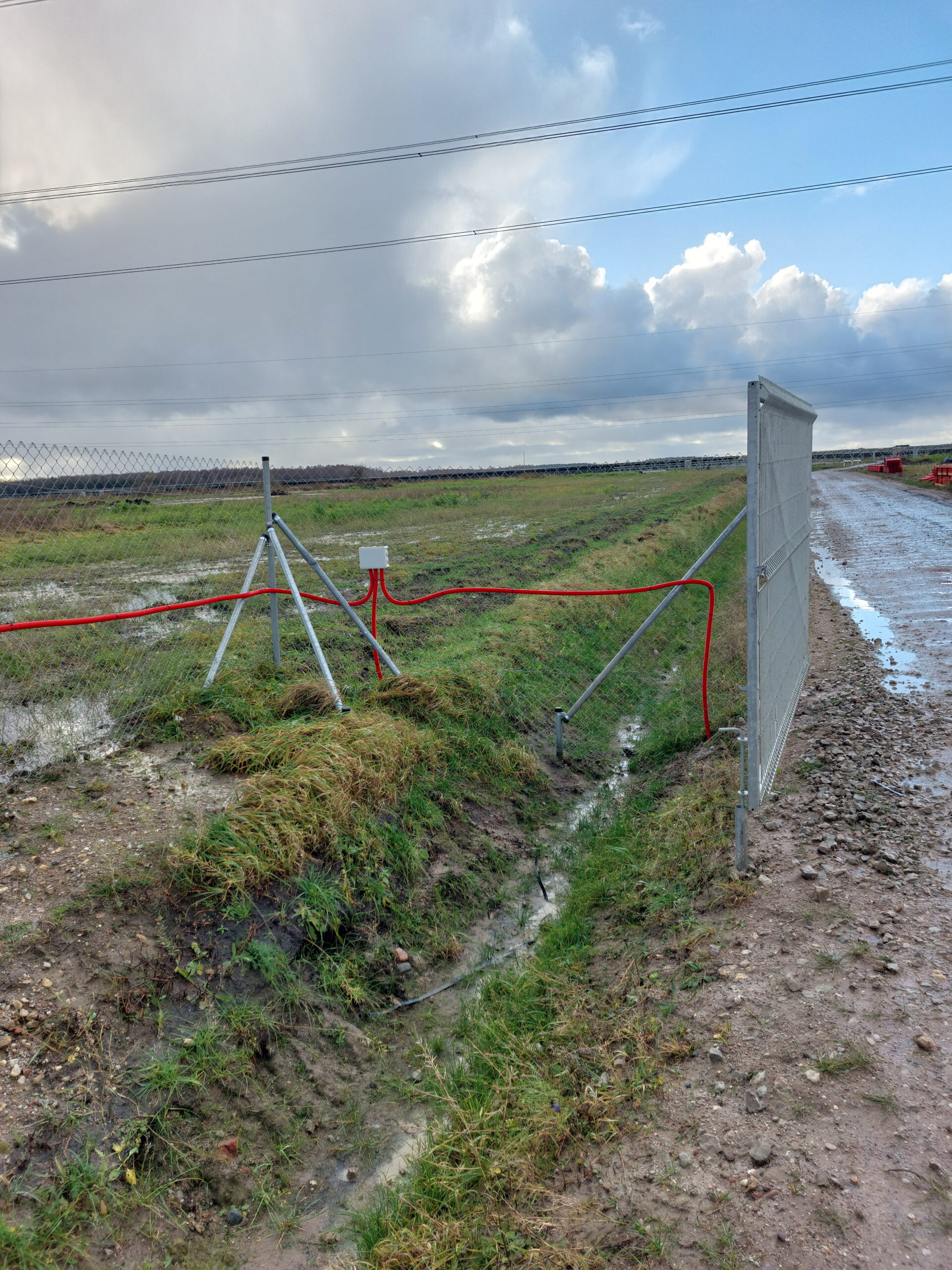
As the label implies, a melioration ditch (see picture on the right) is a V-shaped excavation designed to guide run-off water away from the site. This water is diverted toward lower elevations where it can safely disperse. These ditches typically run alongside maintenance tracks or along the outskirts of the PV area at the base of hillsides. Similar to melioration ditches are Swales. If the former is meant to divert water, swales capture run-off water, slow its spread and eventually sink it into the ground. Both solutions are often used in conjunction. Where melioration ditches are required by local regulations, swales offer an affordable supplementary way to mitigate flood risks while supporting local biodiversity. |
 |
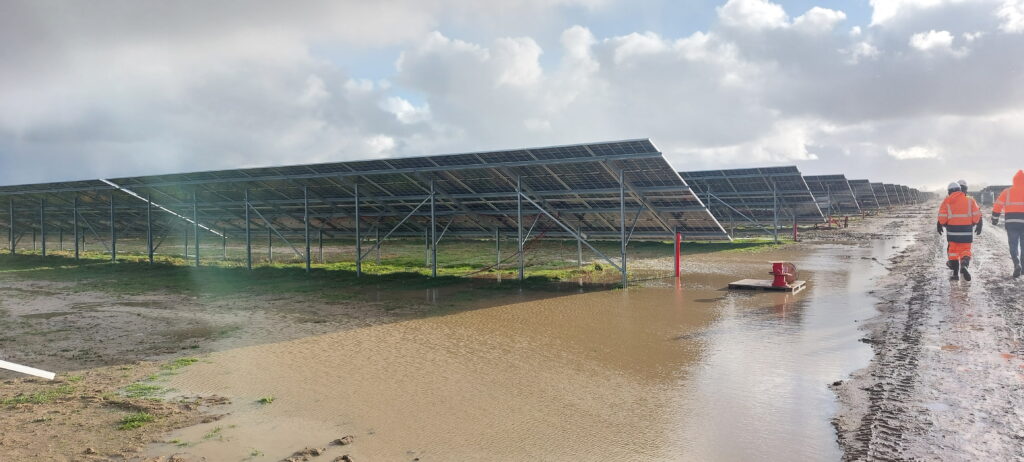
When these drainage solutions are omitted, sites face several long-term consequences:
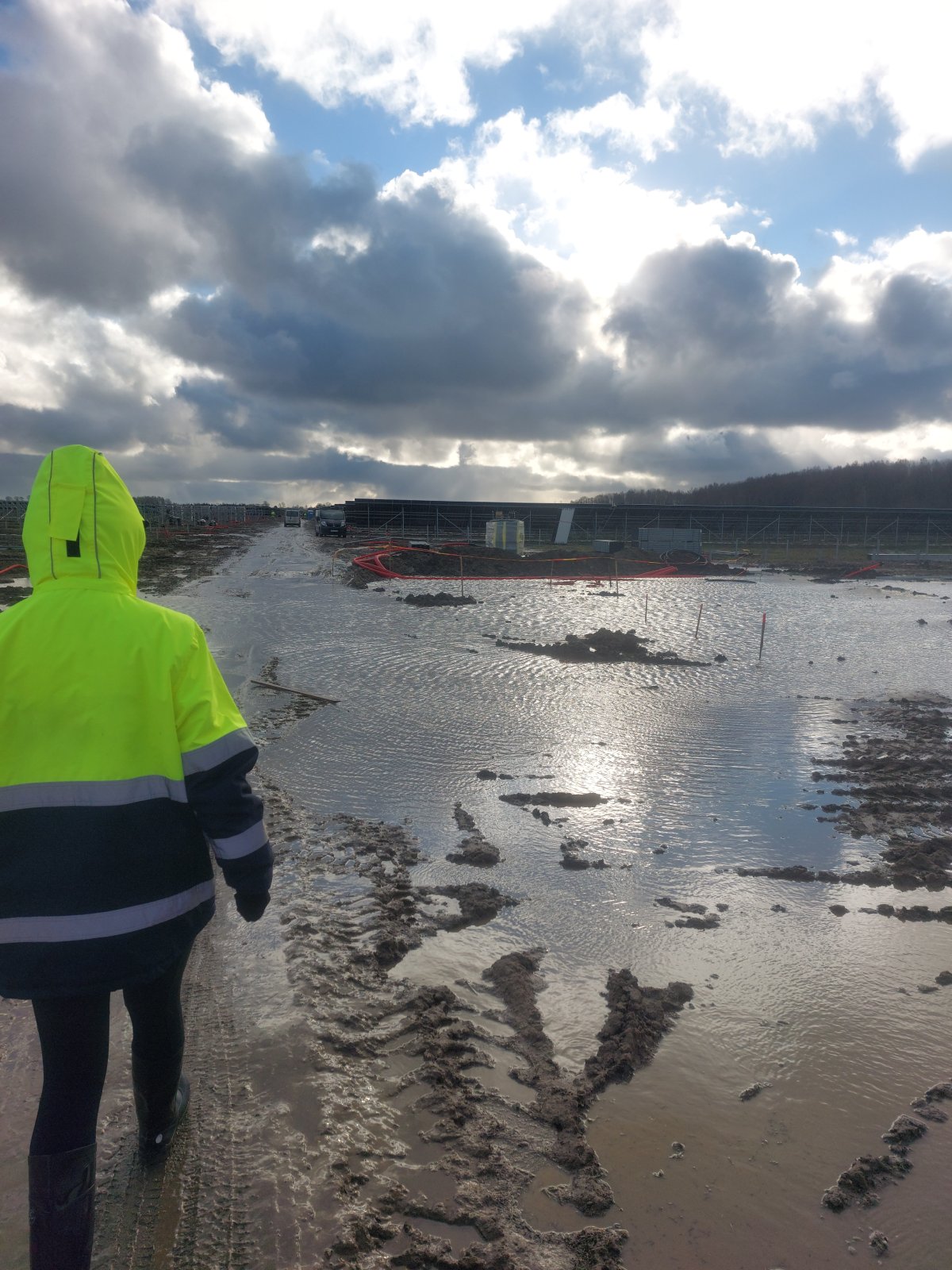 |
Both situations lack melioration trenches alongside the maintenance tracks that would lead the rain water away further down the site into swales or an allocated field. During construction, such flooding mostly impacts trenching and all excavating works. Excessive pooling necessitates frequent pumping operations increasing the asset CAPEX costs. During site operations, if the risk is left ignored, it might hinder maintenance, such as grass cutting and general movement of personnel and machinery – a hit to the OPEX. That is, if the soil is of stable quality. In cases where mud is the dominant terrain, the site can become borderline inaccessible until the water is drained. |
The worst consequences emerge (pun intended) during the winter season. As water accumulates and freezes in the trenches, no backfilling can be done due to the need to house the cable ducts in sand before re-adding the top soil.
Many projects lacking flood mitigation measures were constrained by limited site area and the need to maximize DC capacity for future profitability. Since space alongside maintenance tracks must already accommodate cable trenching, developers often opt out of additional melioration ditches. While this approach may suffice on significantly sloped terrain where swales in key valleys prevent rain water overaccumulation, it otherwise leads to the pooling shown above. This not only hinders on-site progress but can force a complete halt to works during the winter months.
Soil Erosion
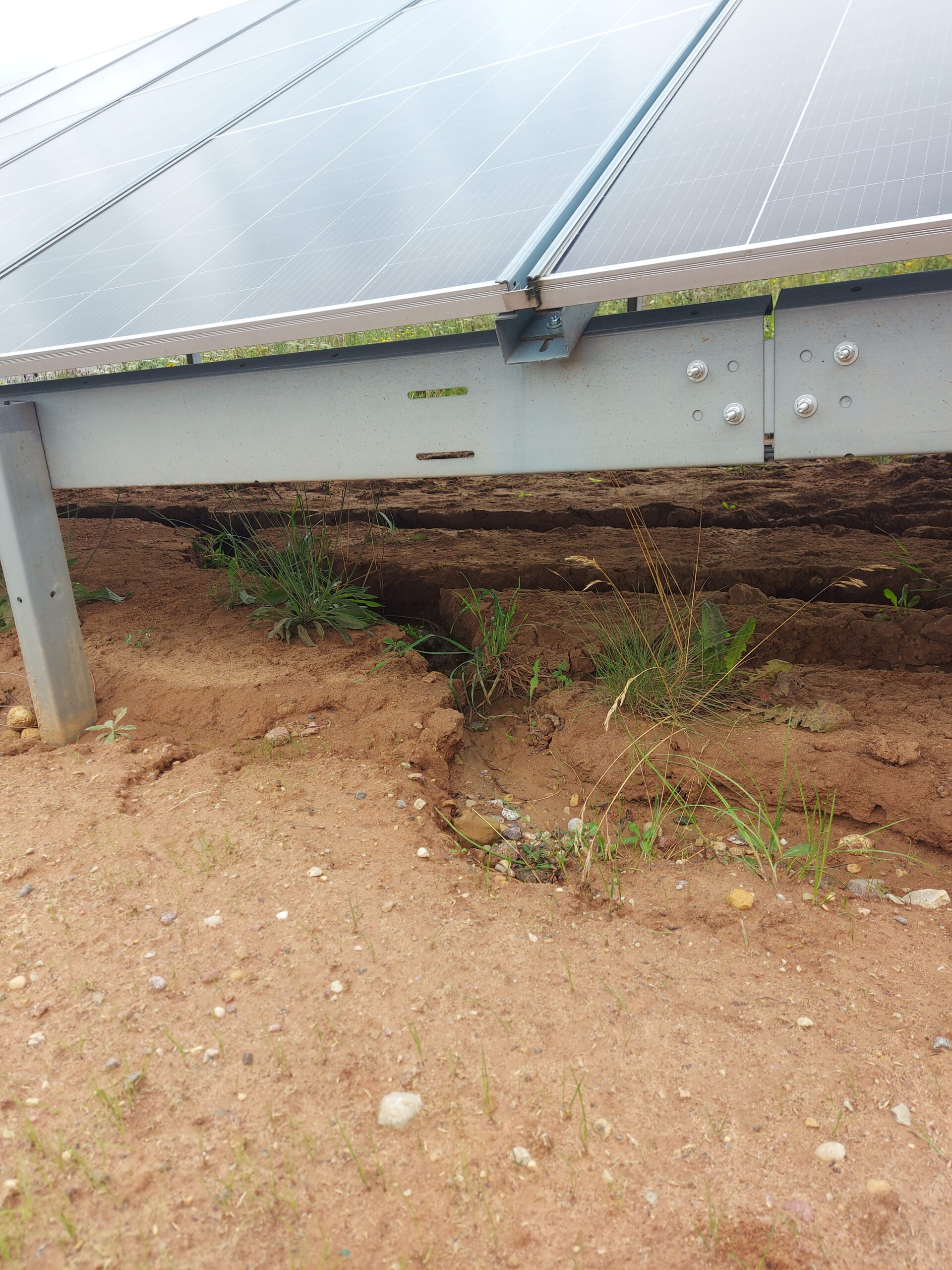
When the construction phase is finally over and the CAPEX costs come out green, the increasing OPEX costs due to never solving the root drainage issues will eat away at the assets evaluation by the end of year 25, YoY. And, in the case of today’s article, it comes from soil erosion:
 |
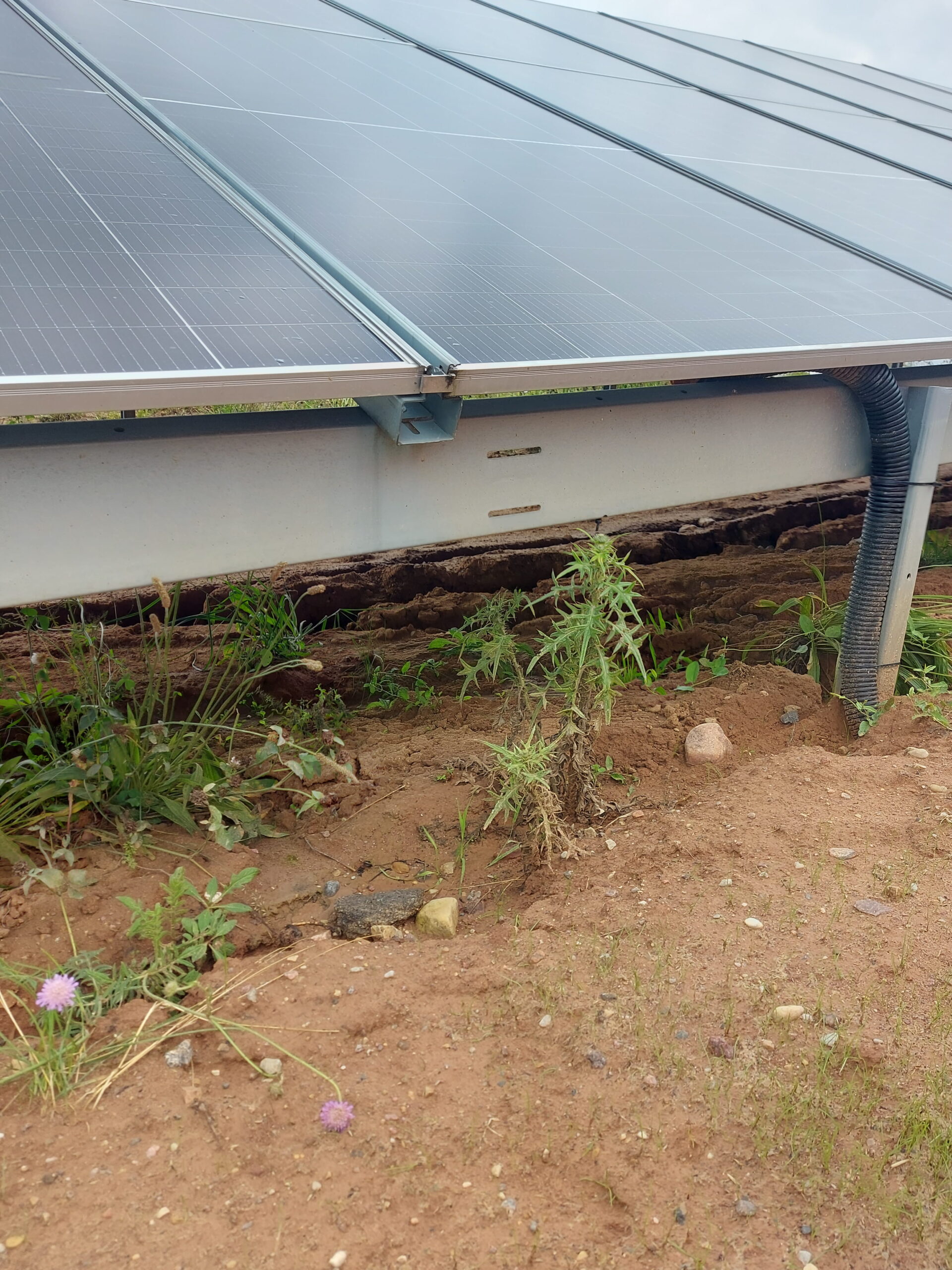 |
The primary risk of soil erosion is the degradation of the PV frame foundations, which progressively compromises structural stability. If left unaddressed, this could lead to the worst-case scenario, total structural collapse or, more commonly, cable loosening and excessive tension as the structure shifts.
Another likely issue caused by erosion is when buried DC ducts are forced back to the surface. This necessitates extra work to ensure they are put back in place.
Potential Mitigation Strategies
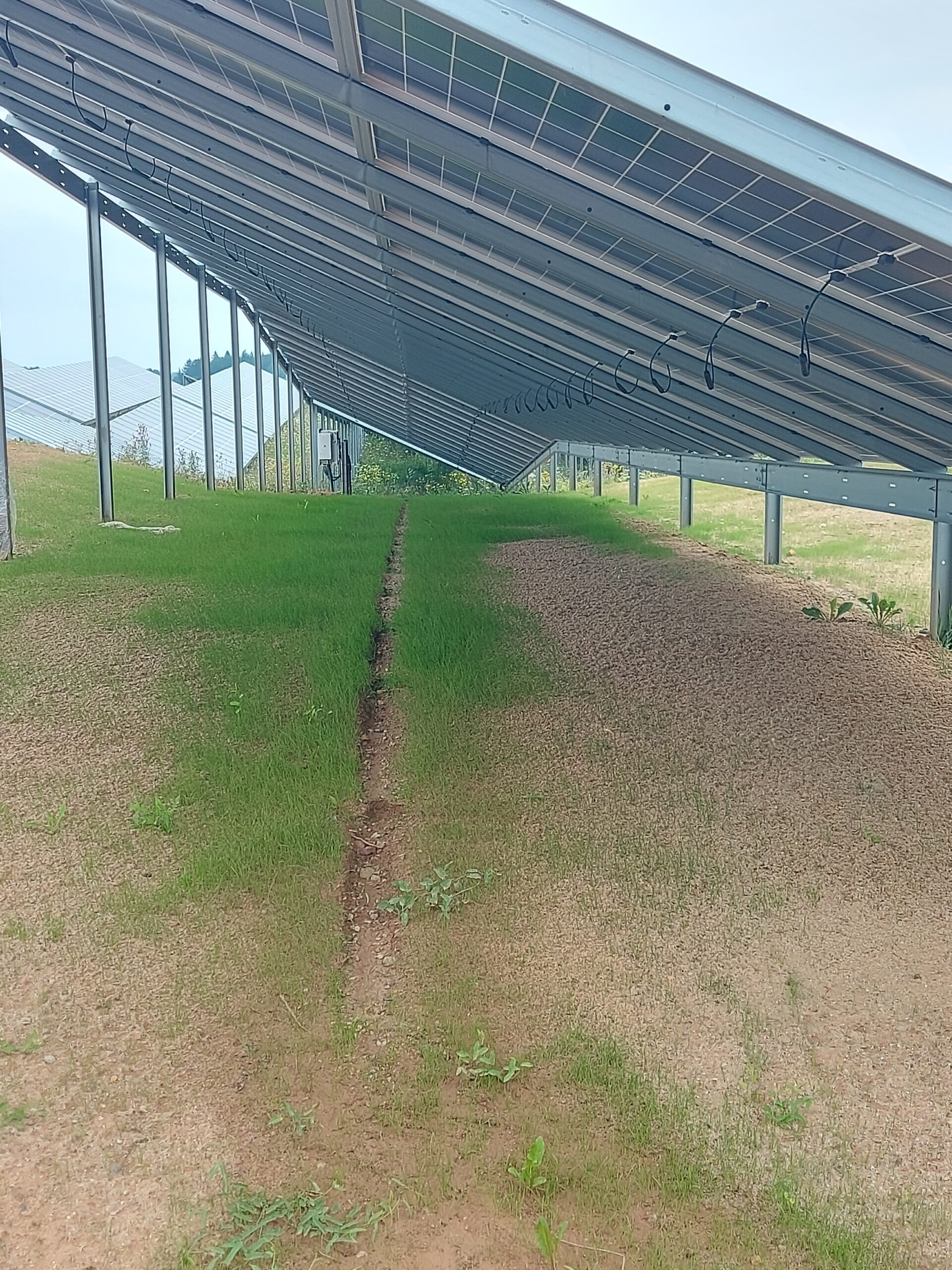
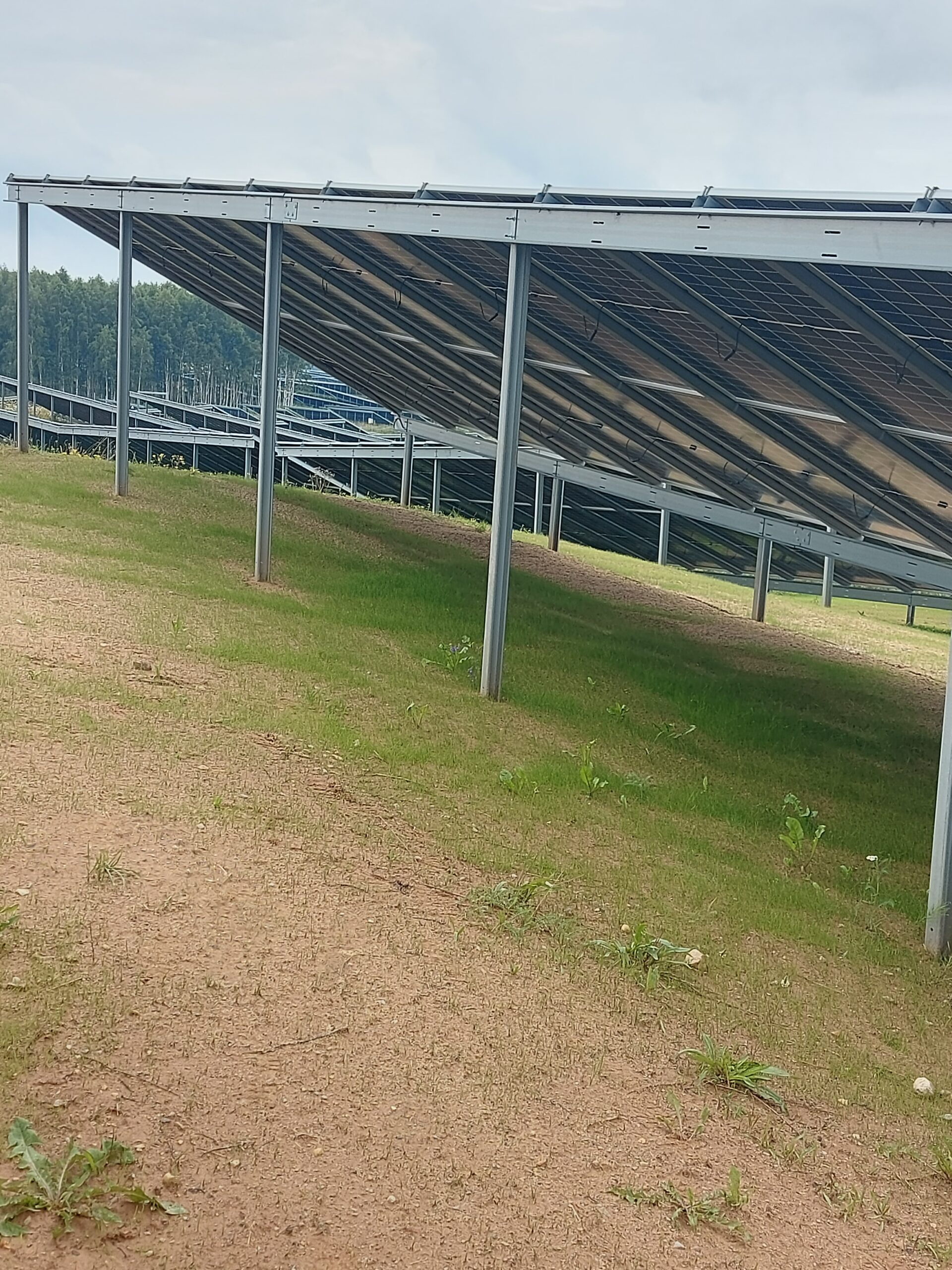
As you can see from most of the pictures I shared, the soil is mostly clay. Such ground tends to be notoriously difficult for greenery to grow. And without greenery, there are no roots that stop it from washing away. Because clay particles are so incredibly small and flat, they stack together tightly like a deck of cards.
This creates a few major problems for plants:
- Zero Drainage: When clay gets wet, it holds onto water and turns into a sticky, dense muck. Plant roots can actually drown or rot because there is no oxygen in the soil.
- Concrete Hardness: When clay dries out in the sun, it bakes into a hard, cracked surface that is nearly impossible to dig through.
- Root Blockage: Delicate young roots (especially grass seed) struggle to physically push their way through the dense structure of clay.
- Slow to Warm: Because clay holds so much water, it stays colder longer in the spring, which delays seed germination.
But all these roadblocks are not stopping one of our clients from trying. As you can see below, the same site is experimenting with sprayable grass technology in hope to fight against the erosion:
 |
 |
Ultimately, prioritizing effective drainage and soil stability as fundamental engineering constraints, rather than mere secondary maintenance concerns, is vital for safeguarding both the structural integrity and financial viability of an asset.
Through the early deployment of comprehensive water management strategies, such as melioration ditching, biodiversity-supporting swales, and advanced soil anchoring, developers can neutralize those Silent Yield Killers that compromise durability. This proactive commitment ensures that a solar park remains accessible, robust, and continues to maintain a positive return on investment throughout its entire operational lifecycle.
Coming Up in Part 3: Equipment Placement
Moving away from soil, the next critical battleground for asset efficiency is the strategic placement of infrastructure. I will go over best practices for inverter and substation positioning, including strategies for superior environmental protection, passive thermal management, and ensuring unobstructed maintenance access. I will also highlight common pitfalls to avoid, such as poor elevation choices that cause shading, inadequate structural clearances that block maintenance, and design inaccuracies that lead to physical clashes between equipment. Stay tuned!