Beyond the Megawatt: How the 2026 Energy Transition is Redefining Utility-Scale Solar Engineering
This article draws on insights and data from IRENA (2026), “World Energy Transition Outlook 2026: 1.5°C Pathway,” and reflects Detra Solar’s practical perspective on utility-scale solar engineering, hybrid PV & BESS design, and lifecycle asset optimization.
The global energy transition has officially entered its execution phase. For years, the renewable energy industry’s primary objective was driving down the levelized cost of energy (LCOE) and putting as many modules on the ground as possible. That era was a resounding success – but it has fundamentally changed the rules of the game.
According to the newly released World Energy Transition Outlook 2026 by the International Renewable Energy Agency (IRENA), global renewable capacity reached 5,155 GW in 2025, driven by a record-breaking 693 GW of annual additions, with solar PV alone contributing 513 GW.
To remain aligned with a 1.5°C climate pathway, global capacity must scale to 18.4 TW by 2035 and 38.2 TW by 2050. However, as the latest data makes clear, the challenge for developers and independent power producers is no longer generation. The true bottlenecks of this decade are grid infrastructure, system flexibility, and land optimization.
At Detra Solar, we believe that navigating this new landscape requires a shift from mere capacity deployment to holistic, lifecycle-focused engineering. Here are the three structural shifts redefining utility-scale solar engineering, and how developers must adapt.
1. The Grid and Storage Imperative: The End of Standalone Solar
Adding solar capacity to the grid only works if the grid can absorb it. IRENA highlights that power grids and energy storage are no longer secondary components; they are the primary binding constraints of the modern energy landscape.
To keep pace with generation, annual grid investments must double from USD 0.5 trillion to USD 1.0 trillion per year through 2035, and reach USD 1.2 trillion annually between 2036 and 2050. Storage is following a similarly aggressive curve, with global installed BESS capacity needing to expand from 416 GW in 2025 to 2,530 GW by 2035. Furthermore, the operational profile of storage is shifting: new utility-scale storage commissioned in 2025 averaged around three hours in duration (up from two hours in 2023), with a growing share built for four hours or more as the market moves from short-term frequency regulation to bulk peak energy shifting.
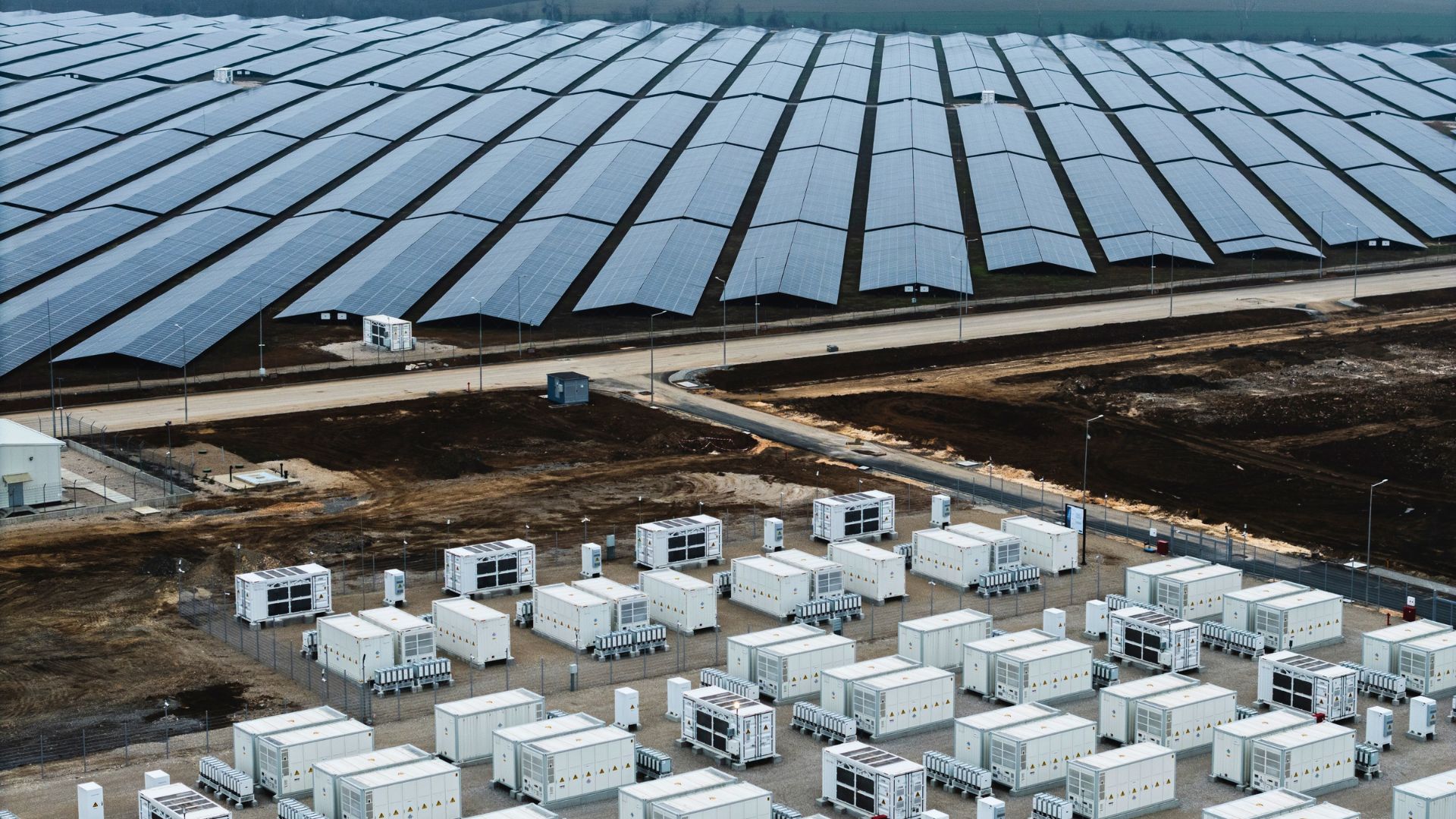
The Engineering Reality: Standalone solar is rapidly giving way to hybrid Solar + BESS architectures. Project bankability now hinges on engineering flexibility directly into the plant. Designing for co-located storage, dynamic curtailment management, and strict grid compliance early in the design phase is essential to de-risk projects before interconnection studies even begin.
2. The New Demand Curve: Electrification and the AI Load
Electricity is on track to become the world’s dominant energy carrier. IRENA projects that electricity’s share in global final energy consumption must climb from ~23% today to 35% by 2035, surpassing 50% by 2050. Because electric technologies are 3 to 5 times more efficient than fossil combustion, direct electrification allows the world to deliver significantly more useful energy while cutting primary fuel waste.
But this transition introduces a fundamentally new demand curve:
- Hyperscale AI & Data Centres: The exponential growth of AI compute is introducing massive, flat, geographically concentrated loads that scale much faster than traditional grid buildouts.
- Industrial & Transport Electrification: Transport will surge from ~1% electrified today to 47% by 2050, while residential heat pump capacity expands nearly sixfold by 2030 (from 1,500 GW to 8,900 GW).
- Cheaper Power vs. Higher Grid Fees: While producing solar power is cheaper than ever, power bills also pay for the transmission lines and storage needed to deliver it. Because trillions are needed to modernize power grids, rising delivery fees could offset lower generation costs – meaning end users might not see cheaper electricity bills right away.
The Engineering Reality: Meeting continuous, high-load demand requires dedicated Solar + BESS architectures optimized for high load factors, private wire (behind-the-meter) connections, and 24/7 corporate Power Purchase Agreements (PPAs).
3. The 30-Year Lifecycle: Agri-PV, Climate Resilience, and Repowering
Building a solar plant is not just about commissioning day; it is about safeguarding performance over a 30-year operational lifecycle. IRENA emphasizes that as land competition and permitting remain critical bottlenecks, well-planned PV projects must deliver local environmental co-benefits. This includes degraded land restoration and improved land-use efficiency when paired directly with agriculture or livestock grazing.
Simultaneously, the industry must prepare for the impending repowering wave. While capacity additions are currently tracked on a net basis, gross additions will surge significantly after 2035 as the massive fleet of solar installations built in the 2010s and 2020s reaches end-of-life and requires replacement or repowering.
The Engineering Reality: Unlocking viable sites while safeguarding asset longevity demands engineering with foresight from day one. This means:
- Optimizing Agrivoltaics (Agri-PV): Balancing tracker heights and layout spacing for dual land yield without triggering costly operational constraints.
- Building Climate Resilience: Adapting to rising temperatures requires building climate resilience into electrical design to manage thermal derating and extreme weather risks.
- Repowering-Ready Architecture: Designing civil layouts, trenching, and cable runs that can seamlessly integrate higher-efficiency modules and next-generation inverters down the road.
The Future of Solar is Engineered
The era of standard solar development is officially behind us. As IRENA’s World Energy Transition Outlook 2026 demonstrates, achieving global energy goals is no longer a question of proving generation technology; it is an intricate systems-engineering challenge. Over the coming decade, the true value of a utility-scale project will not be measured by nominal nameplate megawatts, but by grid absorbability, storage flexibility, dual land efficiency, and decades-long operational resilience.
At Detra Solar, this structural shift defines our engineering philosophy. We bridge the gap between high-level developer ambition and the technical realities of today’s power networks. By integrating advanced engineering into early feasibility and design phases, we help developers and EPCs eliminate costly redesigns and satisfy stringent utility interconnection standards.
High-yield solar infrastructure requires engineering built to outlast multiple technology cycles. Whether you are balancing tracker clearances for an Agri-PV project, sizing co-located storage to serve continuous industrial loads, or designing civil architectures that simplify future repowering, engineering with foresight is what ultimately protects project bankability.
Planning an Agri-PV project, a complex Solar + BESS layout, or evaluating a repowering study?
Book a 30-minute consultation with our engineering team today to review your site layout, de-risk your grid connection, and ensure your system is engineered for maximum uptime and performance from day one.
References:
International Renewable Energy Agency (IRENA). (2026). World Energy Transition Outlook 2026: 1.5°C Pathway. Abu Dhabi: IRENA.