Agri-PV Design in Practice: Engineering Solar Projects That Work With Agriculture
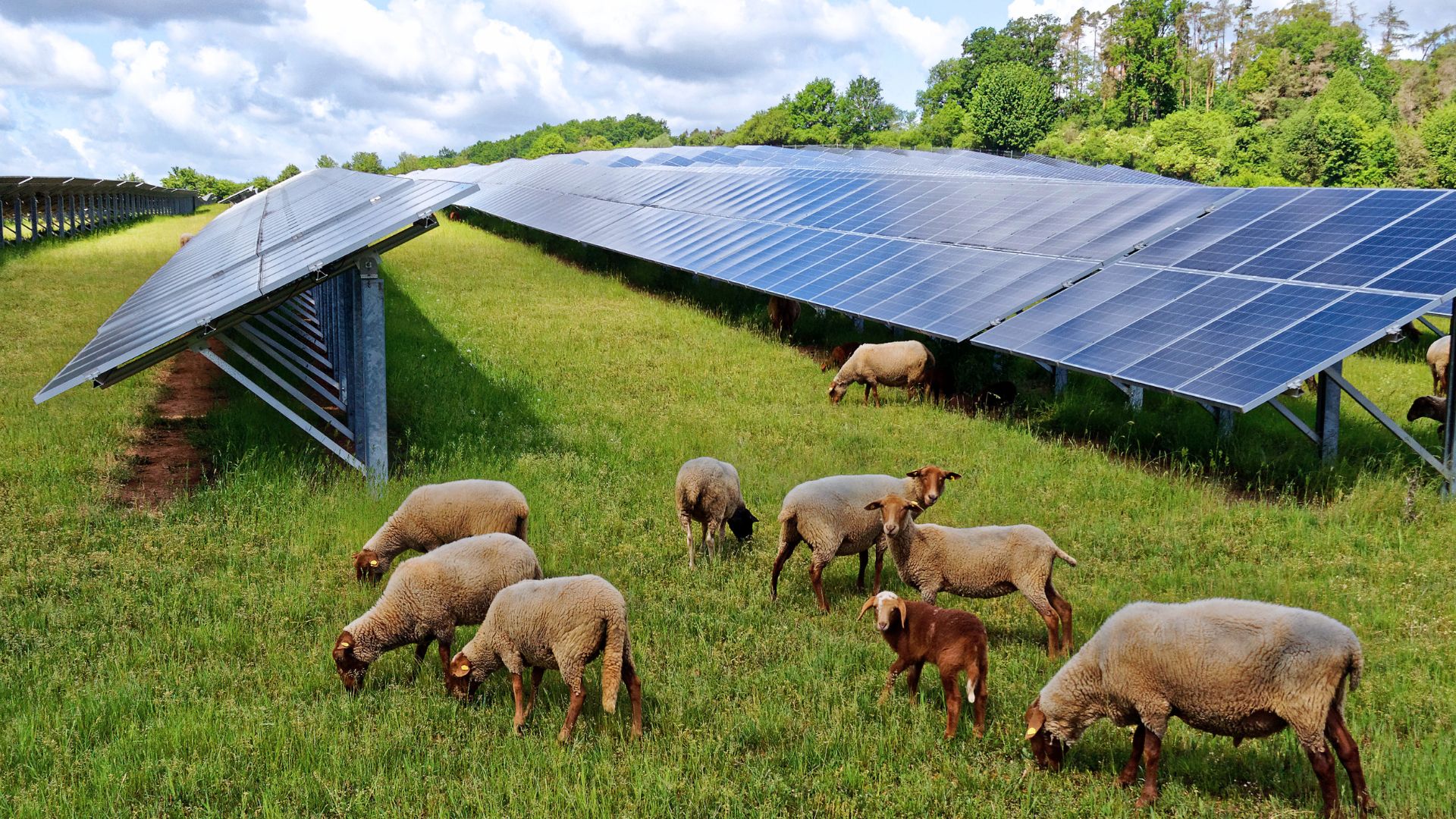
As land-use pressure increases across Europe, Agri-PV is becoming an increasingly relevant solution – allowing developers to combine energy generation with agricultural activity on the same site.
However, the technical reality of Agri-PV is often underestimated. Integrating photovoltaic systems into active agricultural environments introduces a new layer of design complexity – where structural, electrical, environmental, and operational considerations must all align.
At Detra Solar, our approach to Agri-PV is shaped by hands-on experience across a wide range of project types, particularly in markets such as France, where regulatory frameworks and deployment volumes are currently leading the European landscape.
Designing for Agricultural Functionality First
A key distinction between conventional utility-scale PV and Agri-PV lies in the role of the land beneath the modules. In Agri-PV, that land remains productive – whether for livestock grazing or crop cultivation – which fundamentally changes how layouts are approached.
Across our portfolio of approximately 60 Agri-PV projects, the majority have been developed for sheep grazing, followed by cattle and crop-based systems. Each of these applications introduces different spatial and behavioral constraints, which must be reflected in the design from the earliest stages.
One of the most critical variables is module height. Rather than applying a standard configuration, clearance is defined based on the specific agricultural use case. For sheep, lower clearances around one meter are typically sufficient, whereas cattle require significantly more vertical space – often in the range of two to two-and-a-half meters – to ensure safe movement and avoid interaction with structural elements. Pig farming introduces yet another variation, requiring intermediate clearances that account for both size and behavioral patterns.
These decisions are not purely geometric. They directly influence structural loads, foundation design, and overall system cost. At the same time, height constraints must be carefully managed to avoid triggering additional safety classifications – such as “working at height” – which can introduce further regulatory and operational complexity.
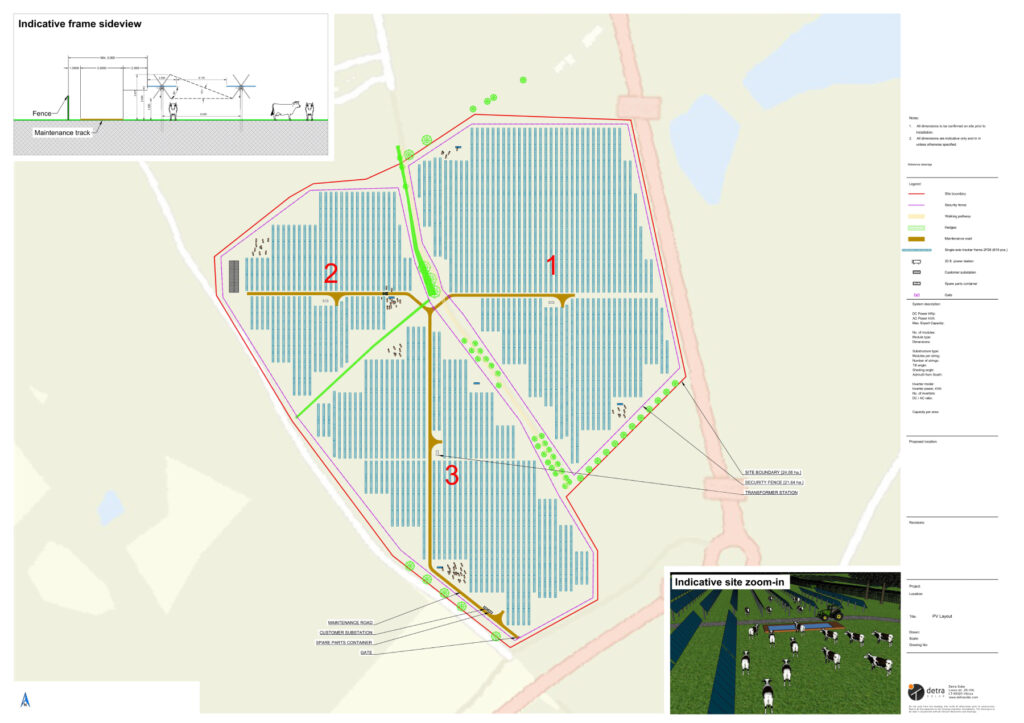
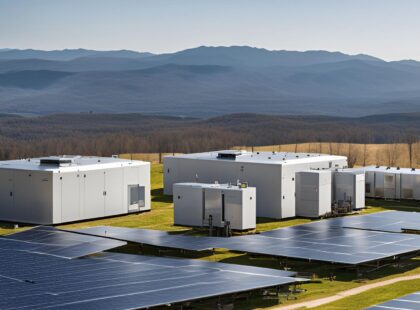
Image 1: PV layout
Spatial Design: Balancing Accessibility, Shading, and Operations
Row spacing in Agri-PV projects is no longer driven solely by energy yield optimization. Instead, it becomes a multi-variable problem where shading losses, agricultural access, and maintenance logistics must all be considered simultaneously.
From a practical standpoint, access requirements often set the baseline. Maintenance roads and internal pathways are typically designed to accommodate agricultural machinery and emergency vehicles, with widths of around four meters – and in some cases five meters – depending on local fire safety requirements. This spacing extends into the array layout itself, where sufficient distance between rows is required to enable vehicle movement without disrupting operations.
At the same time, increasing row spacing has a direct impact on Ground Coverage Ratio (GCR) and therefore on energy yield. This is where design optimization becomes critical. Using tools such as PVcase for layout modeling and PVsyst for performance simulation, we iteratively adjust spacing parameters to strike the right balance – ensuring that agricultural usability is preserved without introducing unnecessary energy losses.
This balance is particularly important in crop-based Agri-PV systems, where light availability becomes a limiting factor. Shading analysis must go beyond standard PV assumptions, taking into account the specific requirements of vegetation growth cycles and seasonal variations.
Fire Safety and Compliance as Design Drivers
In markets like France, fire safety requirements are not an afterthought – they are central to project feasibility. We design in line with fire safety guidelines and requirements from authorities such as SDIS, incorporating these constraints directly into the layout rather than addressing them later in the process.
This has several implications for layout and infrastructure. Perimeter buffer zones are typically introduced, ranging from three to ten meters depending on site conditions and proximity to risk areas such as forests. Internal road networks must be designed with slope limitations – generally around 15 degrees – to ensure accessibility for fire trucks under emergency conditions.
Additionally, water storage solutions are often required on-site, with reservoirs sized between 30 and 120 cubic meters and positioned for rapid access. These elements influence both civil design and land use planning, reinforcing the need for early-stage integration between engineering disciplines.
From Layout to System Integration
Agri-PV projects demand a level of integration that goes beyond conventional PV design. Electrical infrastructure must coexist with agricultural operations, often within more complex and less uniform layouts.
Cable routing, for example, must account for increased row spacing and potential interaction with farming activities. Equipment placement – such as inverters and transformers – must consider both accessibility and safety in environments where livestock may be present. Compliance with international standards, such as IEC, remains essential, but must be interpreted in the context of these additional constraints.
In some cases, the integration extends further. We have worked on projects where irrigation systems needed to be incorporated into the design, requiring coordination between electrical layouts and water distribution infrastructure. These interactions highlight the importance of a multidisciplinary approach, where civil, electrical, and agricultural considerations are developed in parallel rather than sequentially.
As another example, we have designed layouts that needed to integrate water retention screen systems – automated nets installed below the modules and above crops such as berry bushes to capture moisture. These systems must be able to extend and retract without obstruction, which places strict constraints on both structure height and terrain consistency. In one such case, significant effort was required to achieve an essentially flat layout across the site – ensuring that module heights remained consistent without creating areas that were too high or too low, allowing the system to function reliably while maintaining agricultural efficiency.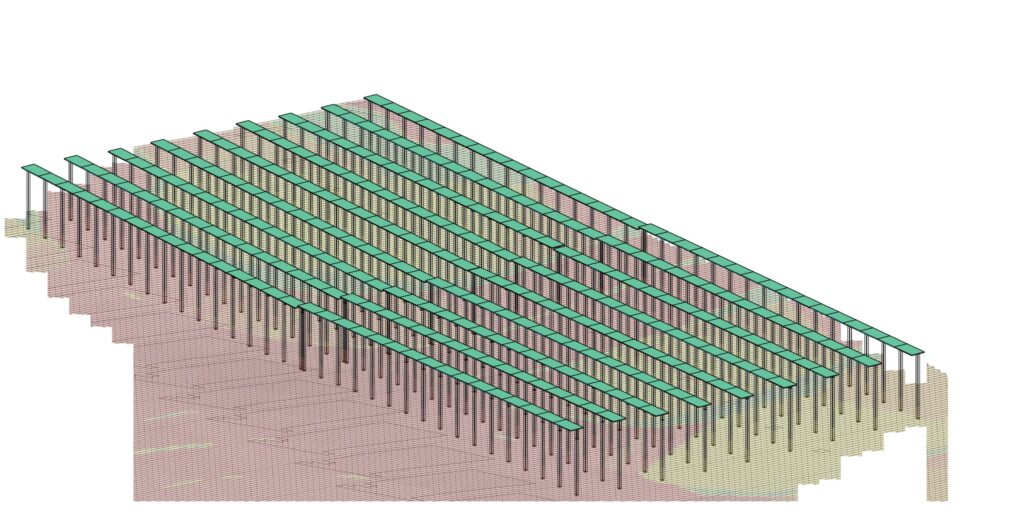
Image 2: Agri-PV layout optimized for uniform height across uneven terrain
The Role of Advanced Modeling in Agri-PV
Given the number of interacting variables, Agri-PV design relies heavily on advanced modeling tools. PVcase enables detailed layout development, including terrain adaptation, grading assessment, and the configuration of non-standard structures such as elevated systems or vertical bifacial modules.
One of the key advantages of PVcase is its integration within AutoCAD, giving access to advanced 3D modeling capabilities. This allows us to develop highly customized, site-specific designs and handle more complex Agri-PV configurations that would be difficult to achieve with standalone tools.
PVsyst complements this by providing robust performance simulations. Its conservative approach to shading and GCR calculations is particularly valuable in Agri-PV contexts, where underestimating shading effects can compromise both energy yield and agricultural productivity. By incorporating site-specific data – such as weather conditions and vegetation characteristics – it allows for more accurate predictions of system performance under real operating conditions.
We have also started incorporating PVcase Yield into our workflow, enabling additional ways to analyse project data and refine performance assumptions, further improving the accuracy of our design decisions.
The combination of these tools supports a design process that is both flexible and data-driven, enabling informed trade-offs between competing objectives.
Delivering Designs That Translate Into Execution
Beyond technical accuracy, Agri-PV projects require clear communication with stakeholders. Developers, landowners, and regulatory bodies must all understand how the system will interact with agricultural use.
This is where detailed design outputs – such as CDS-quality drawings and side elevations – play a critical role. By visualizing the relationship between PV structures and agricultural activities, these deliverables help align expectations early in the project lifecycle and reduce the risk of redesign during later stages.
A Design Challenge That Requires Engineering Depth
Agri-PV is often presented as a straightforward concept, but in practice it represents one of the more complex applications of solar design. Success depends on the ability to integrate multiple disciplines, adapt to diverse use cases, and make informed trade-offs between energy and agricultural performance.
Our experience shows that there is no universal solution – only a structured approach that combines technical expertise with practical understanding of how these systems operate in the field.
For developers, EPCs, and investors, this makes early-stage design decisions especially critical. Getting the balance right from the outset can significantly influence both project performance and long-term viability.
At Detra Solar, we support this process with an engineering-led approach built on real Agri-PV project experience across multiple use cases and markets.
If you’re working on Agri-PV or complex solar projects and want to ensure your design performs both technically and operationally, get in touch with us today.